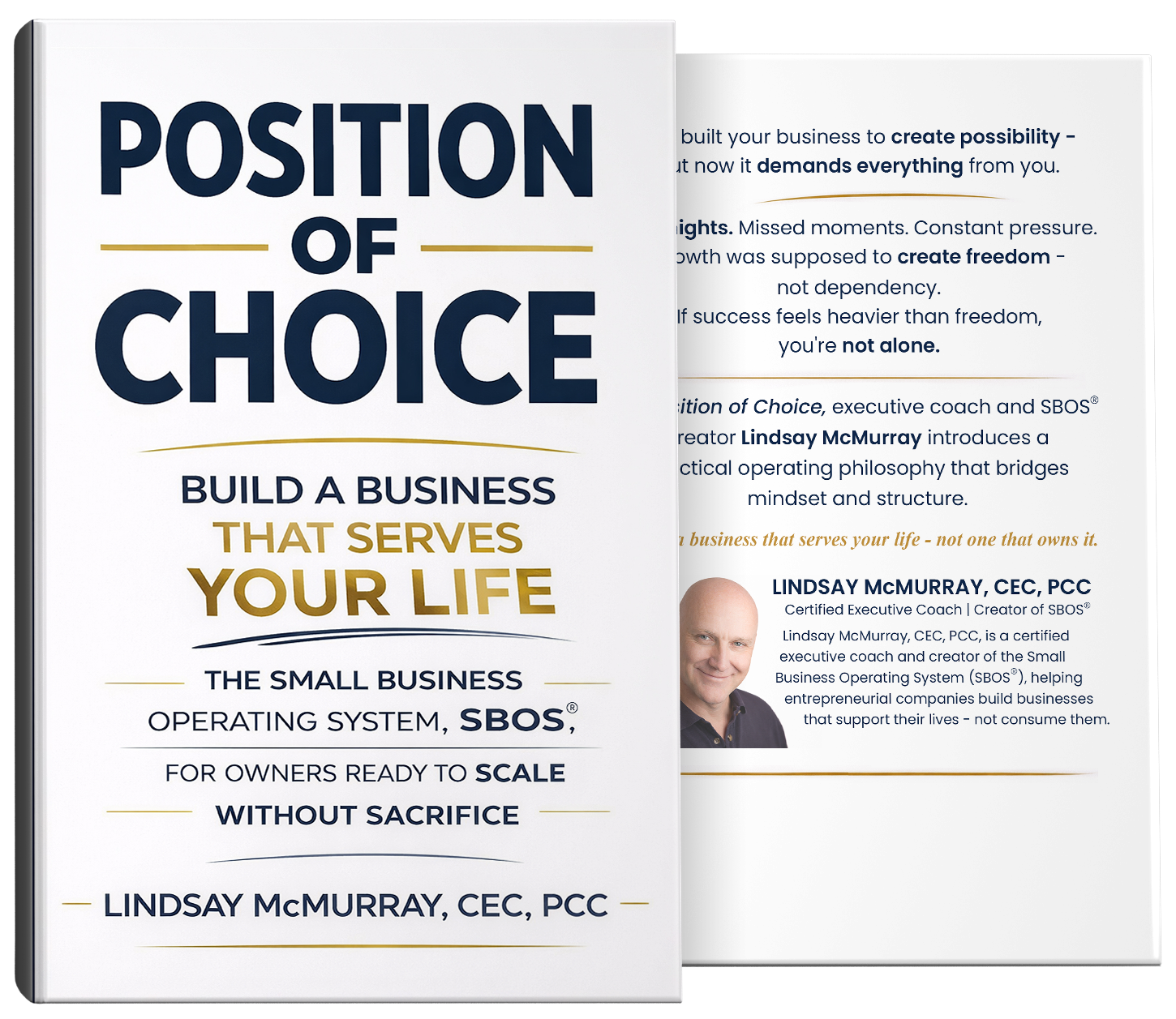
POSITION Of Choice
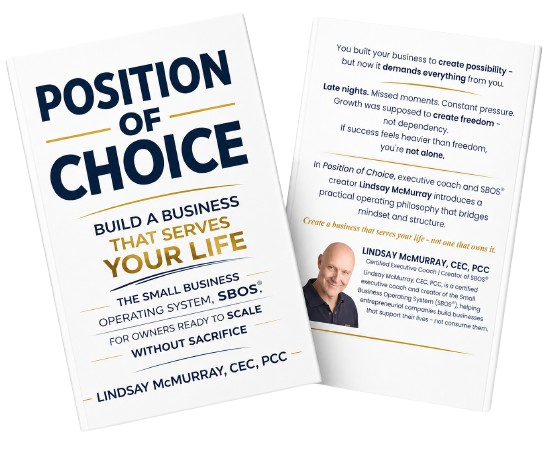
POSITION
choice
BUILD A BUSINESS
THAT SERVES
Your Life
typesetting industry. Lorem Ipsum has been the industry’s standard dummy text ever since 1966, when designers at Letraset and James Mosley, the librarian at St Bride Printing Library,
Lindsay McMurray
Lindsay McMurray is a seasoned entrepreneur, Certified Executive Coach (CEC, PCC), and Master Chair with TEC Canada/Vistage International, where he works closely with CEOs, presidents, and business owners navigating growth. Through years of building his own companies and coaching hundreds of founder-led businesses, he has seen a consistent pattern: most businesses don’t struggle because of effort—they struggle because of design.
He is the creator of the Small Business Operating System (SBOS®), a practical framework designed to help entrepreneurs remove themselves as the bottleneck and build businesses that operate without constant dependence on them. His book, Position of Choice™

About
The Author
Lindsay McMurray’s perspective is built from doing—not just advising. He has started, scaled, and led multiple businesses across industries, experiencing firsthand the realities of growth, setbacks, and the pressures of ownership. These include Commercial Industrial Window Cleaning, Direct Sales gency, Building Virtual Helpdesk and Classroom, National Corporate Training Companies and Performance Management Consulting. Today, as an Executive Coach and Master Chair with TEC Canada, he works closely with CEOs and entrepreneurs, guiding them through the same challenges he once faced. This real-world experience led to the creation of SBOS® and the writing of Position of Choice™
About the Book
POSITION Of Choice
Most business owners don’t have an effort problem – They have a design problem.
You’ve pushed, sacrificed, figured things out as you go—and it’s worked… to a point. If your business still depends on you for decisions, revenue, or momentum, you’ve hit the ceiling most founders never see coming.
That’s the Founder Bottleneck.
SBOS® exists to fix it.
This isn’t another book, course, or tool -It’s a complete system to help you shift how you think, install the right structure, and build a business that runs—so you don’t have to.
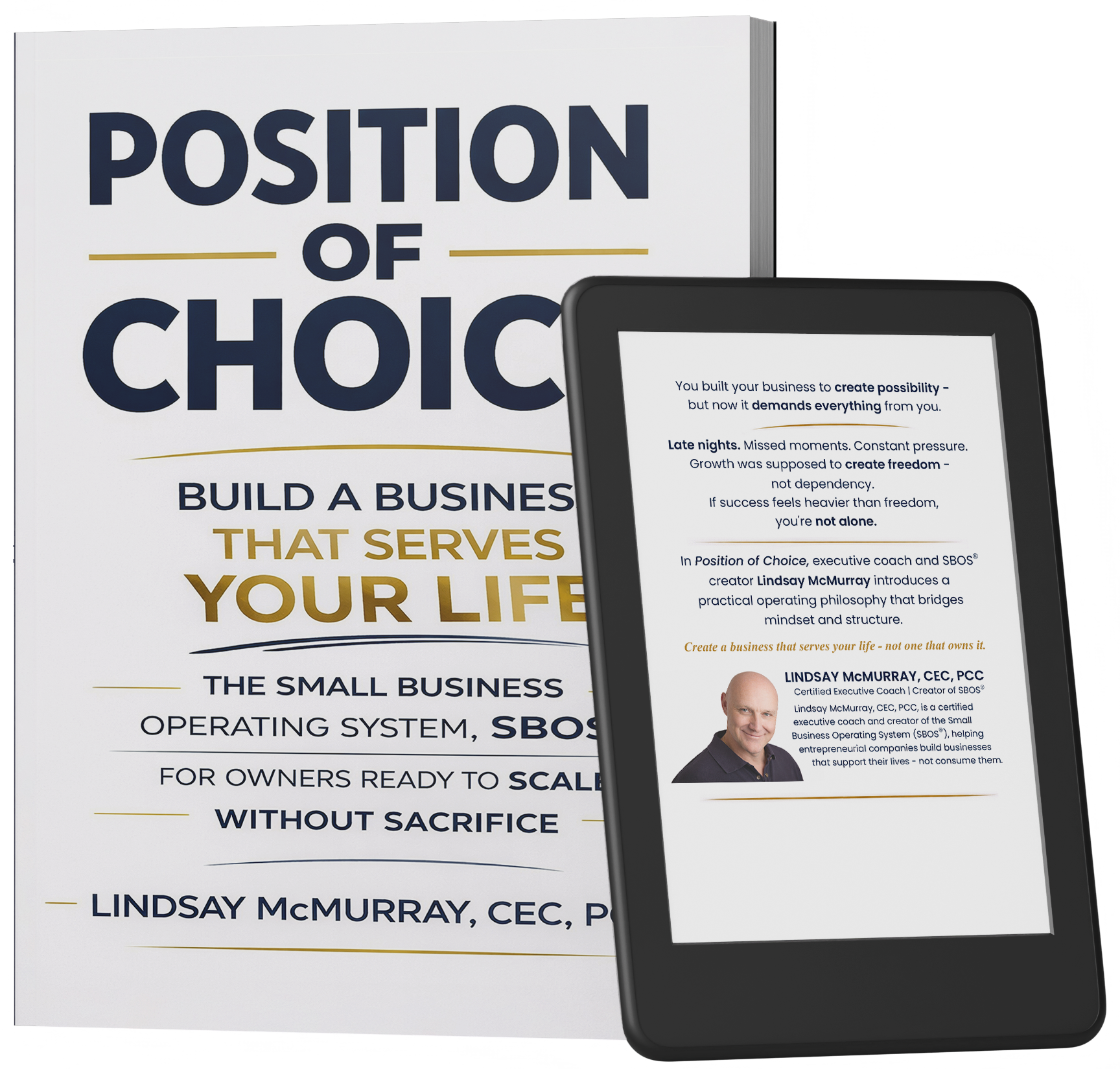
Choose the path that fits where you are now
Start with the book, implement the full operating system and access support through the SBOS® Coach digital mind.
Each offering is designed to help you move toward a business that serves your life.
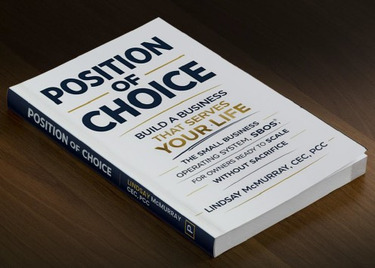
Position of Choice™ Book
CA$35.00
Small Business Operating System - SBOS® Training Program
CA$3000.00

Annual membership to Your SBOS® Coach
CA$950.00
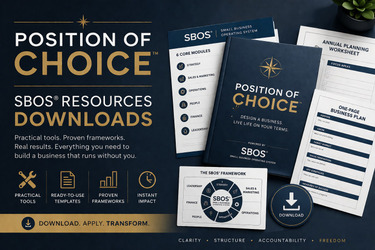
Position of Choice™: SBOS® Resources Downloads
Free
Subscribe
It is a long established fact that a reader will be distracted by the readable content
Reader Testimonials
Words from the Heart
It is a long established fact that a reader will be distracted by the readable content of a page when looking at its layout. The point of using Lorem Ipsum
blogs
Where can I get some?
Where does it come from?
Ready to Take That First Glide?
It is a long established fact that a reader will be distracted by the readable content of a page when looking at its layout. The point of using Lorem Ipsum is that it has a more-or-less normal distribution of letters, as opposed to using 'Content here,
Stay Connected